|
The flying general of the overseas Chinese who fought against Japan visited Phoenix
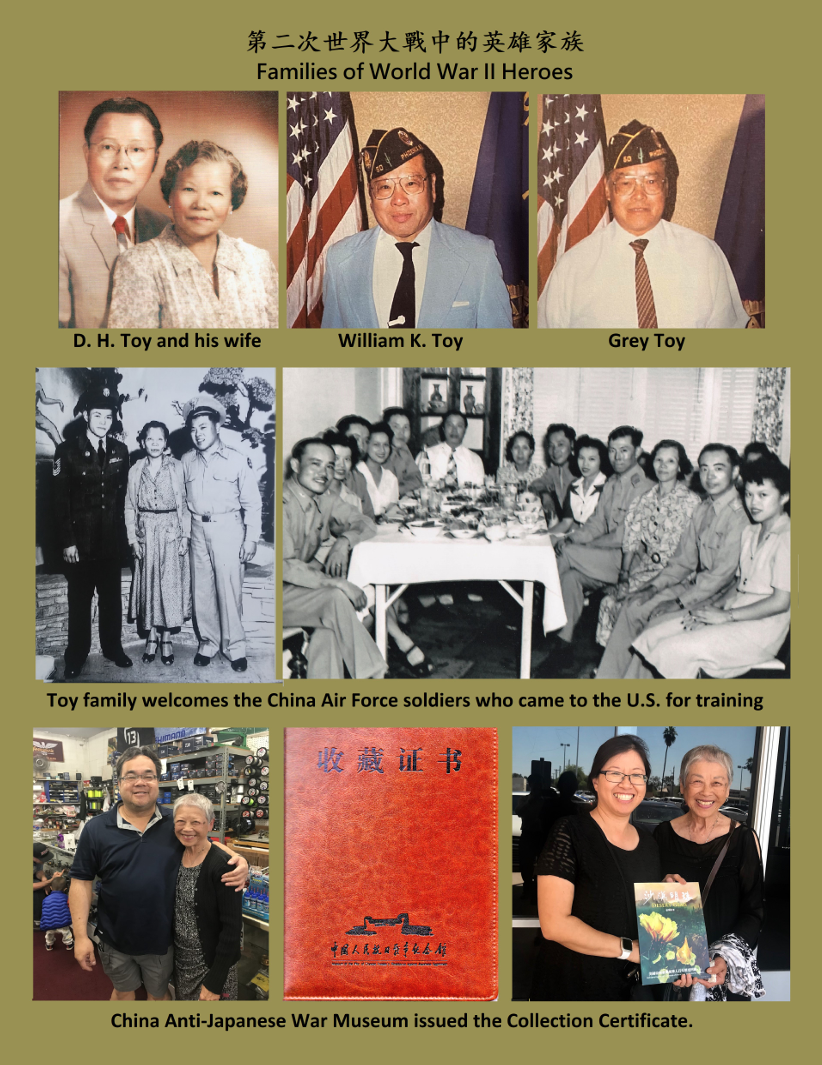
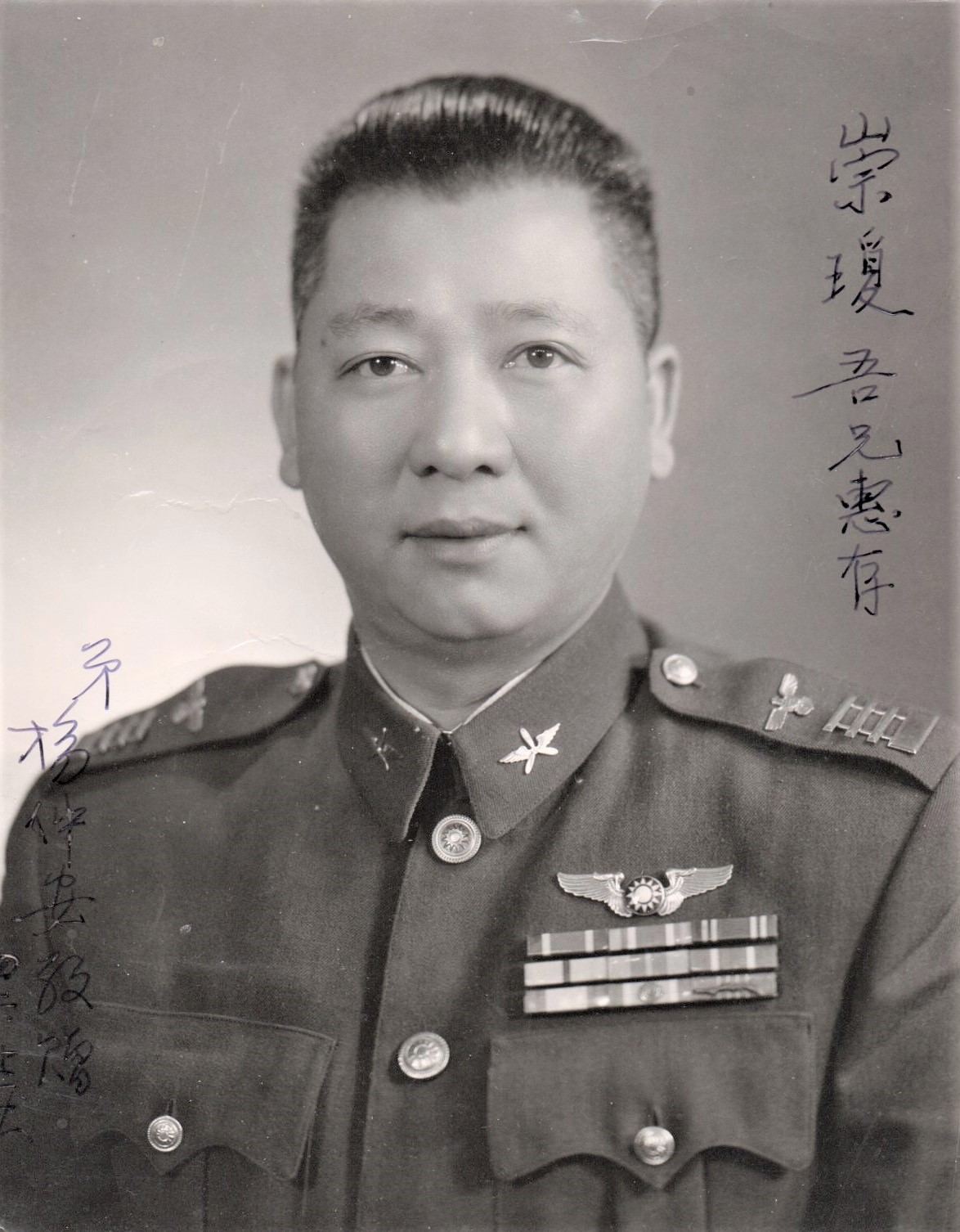
Recently, Guan Xiuyu, the eleventh daughter of D. H. Toy Family of in Phoenix gave me a photo of the flying general of the overseas Chinese who fought against Japan, Yang Zhongan(楊仲安)which was treasured by her father.
Yang Zhongan(楊仲安) On the right side of the photo, it says: My brother Chongqiong, please keep it. On the left side of the photo, it says: My brother Yang Zhongan, respectfully presents it 42. 12. 21 (December 21, 1942) Yang Zhongan was from Bao'an County, Guangdong Province (now Shenzhen City). When he was 12 years old, he moved to the United States with his family and attended high school in New York. At the age of 25, he owned an elegant restaurant in the local Chinatown and was the first to set a precedent for a female band to perform in the restaurant, which became a good story at the time. In addition to doing business, he learned aircraft maintenance and flying skills in Long Island, New York. He also raised funds with overseas Chinese youth to buy a used aircraft and joined the local aviation club. In 1931, Japan created the "September 18th Incident" in Shenyang, and the invasion iron hoof set foot on the land of China. Overseas Chinese communities were excited when they heard the news, and Chinese youth even put forward the slogan of "aviation to save the country" and learned to fly to defend the motherland. Overseas Chinese in the United States took action immediately and raised funds to establish the "America Overseas Chinese Aviation School" in Portland, Oregon on the west coast in November of that year. Yang Zhongan resolutely ended his business in New York and entered the school in 1932 with the recommendation of the New York Chinese Consolidated Benevolent Association, becoming a second-term flight student. The Overseas Chinese Aviation School in Portland enrolled two classes of students. In 1933, 29 graduates, together with three overseas Chinese graduates from Adcox Aviation School in Portland, were all sponsored by the Overseas Chinese Aviation National Salvation Association to return to China by boat, and arrived in Shanghai via Hong Kong. At that time, the military and civilians across the country shared the same hatred of the enemy, and the fighting atmosphere was high. Yang Zhongan was deeply moved. In order to show his determination to never return and swear to defend the country to the death, he tore up his American passport and threw it into the Huangpu River. Since then, Yang Zhongan has never returned to the United States as an overseas Chinese. After returning to the country, Yang Zhongan was admitted to the third term of the Central Aviation School in Jianqiao, Hangzhou. Among the twelve people who took the entrance examination, two female graduates, Li Yueying and Huang Guiyan, were not admitted due to gender issues. Five of the other ten were admitted, and Yang Zhongan ranked first. Most of the students in the Central Aviation School of Jianqiao were young students who had joined the army from famous universities across the country. Yang Zhongan's flight instructor was Gao Zhihang (died for his country), and his classmates included Zheng Shaoyu (died for his country), Le Yiqin (died for his country) and General Wang Shizhen. At that time, there were seven retired American pilots teaching at the Central Aviation School, and General Yang volunteered to be an English translator. After graduating from the Miqiao Aviation School, Yang Zhongan began his military career and made many outstanding achievements in the War of Resistance. In 1939, the commander-in-chief of the Japanese army, General Okamura Yasuji, led the 11th Army to launch the "Hunan-Jiangxi Campaign" in an attempt to eliminate the combat power of the Chinese Ninth War Zone by a surprise attack. The commander-in-chief of the war zone, General Xue Yue, commanded 16 armies with a total of 400,000 people to fight. Before the battle, there was panic, soldiers were everywhere, and the Japanese army's movements were kept secret. At this time, Yang Zhongan was ordered to scout the enemy's movements. He flew thousands of miles alone at low altitude and returned to the war zone to scout the Japanese deployment. He found that the Japanese army rushed to build a military road, aiming directly at Changsha. On the way back, he ran out of fuel and had to land in Shapingba on the bank of Jialing River in Chongqing. Due to the urgency of the war, Chairman Chiang immediately sent someone to pick up General Yang to report the enemy situation to his official residence, and Commander-in-Chief Xue Yue deployed the "Tianlu Formation" to resist the enemy one by one, and annihilated the Japanese army outside Changsha. This is still the first "Changsha Victory" that is famous both at home and abroad. At that time, the newspapers had the reputation of Yang Zhongan "fighting Changsha alone". In the three battles of Changsha, Yang Zhongan successfully completed the aerial reconnaissance mission and went back and forth to the enemy alone. This is the Anti-Japanese War story that General Yang talked about with relish throughout his life. Chen Zhongan also led Chinese and American aircraft to bomb the Japanese airport in Vietnam. In the winter of 1941, the Japanese army stepped up its invasion of Southeast Asia and assembled several army flight teams and naval aviation teams at the Saigon base in Vietnam, with a total of 450 Japanese aircraft. When Yang Zhongan was the captain of the First Air Force Squadron, he led his team to bomb Japanese positions and barracks and repeatedly made military achievements. In 1942, Yang Zhongan was appointed as the air commander of the Sino-US mixed formation, leading the Chinese Air Force with 18 Soviet-made SB-3 long-range bombers and 8 American Flying Tigers P-40 fighters, a total of 26 aircraft formations, to bomb the Japanese troops at Gia Lam Airport in Vietnam. This was the first record of the Chinese Air Force's cross-border attack. Later, under the cover of the American Flying Tigers fighter group, he led the Sino-US mixed formation to attack the Japanese troops in Burma, which was the main force of the Allied forces to attack the Japanese troops in the air on the Sino-Burma battlefield at that time. In the late period of the War of Resistance Against Japan, General Yang led Chinese pilots to the United States to receive new aircraft replacement and combat training, which added combat power to the cultivation of talents for the Chinese Air Force. In 1933, Yang Zhongan returned to China to devote himself to the army. He served in many important military positions and was finally promoted to general. He retired in 1958. He was incorruptible, content with poverty, and had no complaints. He was always proud of his military career that paid off his ambition to serve the country through aviation. The Guangdong Baoan Association in Chinatown, New York, still has a tablet of General Yang Zhongan. Among the materials I have consulted, none of the photos of General Chen Zhongan are as clear as the original photo sent to Guan Chongqiong of Phoenix City, including the photos seen by his relatives and officials on the Internet. It took me some time to understand that the collar badge of the Air Force uniform worn by Chen Zhongan during the Anti-Japanese War was the "propeller and flying wing" badge; the "flying eagle badge" of the Republic of China Air Force was displayed on the top of the badge, which was based on the style of the British military at that time; the rows of medals below are called "honors" or "brims". They represent the medals, medals, ribbons and other honors won by the wearer. The shoulder straps (one thick bar and three thin bars) on Yang Zhongan's uniform in the photo, the author found out that this was the rank of colonel in the Republic of China Air Force (he had not yet been promoted to general at that time). The Arizona Chinese Historical Association has preserved the "Collection of Photos of the Second Batch of Graduates of the Chinese Air Force" (including students and instructors) dated "May 15, 1942". There is no headshot or name of Chen Zhongan in the photo, so it means that he did not come to the United States at that time. The above mentioned: "In the late period of the Anti-Japanese War, General Yang led Chinese pilots to the United States to receive new aircraft replacement and combat training", but it does not match the time of the photo, because 1942 was not the "late period of the Anti-Japanese War". It is more certain that Colonel Yang Zhongan at that time visited Phoenix, the United States in December 1942, and presented this handsome photo to Mr. Guan Chongqiong, a military dependent of the Anti-Japanese War at that time, which became a witness of the interaction of the Chinese in Phoenix during the Anti-Japanese War. The Arizona Chinese Historical Association uploaded the photo as a tribute to General Chen Zhongan, a famous overseas Chinese anti-Japanese general, and also as a supplement to his life history. I hope that more people with knowledge can provide information.
Aug 2025
|