|
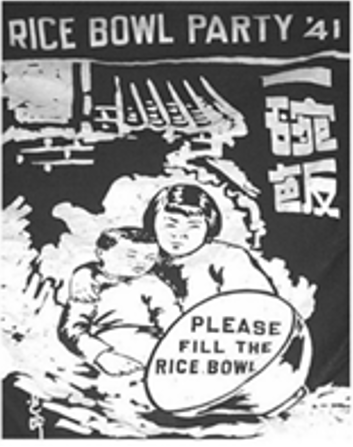
In 2012, the author published the first volume of “Desert Gems ”, in which the historical information about the Arizona Chinese Chamber of Commerce was provided by the brothers Fred Yut Yin Ong and Herry Ong, who were veterans of World War II and senior overseas Chinese leaders. After the July 7 Marco Polo Bridge Incident in 1937, the patriotic enthusiasm of overseas Chinese was high, and various anti-Japanese groups were established. There were 92 National Salvation Associations organized by overseas Chinese in the United States thatwere established at that time. In any town where there were 100 to200 overseas Chinese, there was an organization of the National Salvation Association. If there were fewer people and it was difficult to organize, they would be affiliated with the National Salvation Association of neighboring towns or states. This showed how many there were and how wildly they were distributed. On June 17, 1938, the American Medical Aid to China and the Chinese Civilian Relief Association jointly launched the famous “One Bowl of Rice Movement ” to raise funds for disaster relief for China, which was in the midst of the War of Resistance. It was estimated that there were more than one million participants in the “One Bowl of Rice Movement ” in the United States. In New York’s Chinatown, many Chinese restaurants, grocery stores, food stores, and department stores held charity sales. In San Francisco, activists held a large anti-Japanese demonstration and distributed leaflets by airplanes. Former US President Herbert Hoover, the mayor of San Francisco, and others also participated in the “One Bowl of Rice ”diet event to set an example. There were also overseas Chinese dressed up as refugees, holding an empty bowl and shouting the slogan “Buy one more bowl of rice , save one more life.” After the campaign was launched, various forms of spontaneous donations quietly emerged, the purchase of meal coupons eventually became a symbol, and the “One Bowl of Rice Movement ” became a cohesive force. In addition to the “One Bowl of Rice Movement ” started in the United States, it expanded to many countries such as the United Kingdom and Canada, and had a significant impact. Song Qingling once delivered an enthusiastic speech: “ ‘One Bowl of Rice Movement’ is an expression of sympathy for our war of resistance and the building of our country, and the promotion of the spirit of democracy. Initially initiated by overseas Chinese and sympathizers in the United States, it has been widely held three times in the United States and has also been held in London. Tonight, it is held for the first time in Hong Kong, which has the largest number of overseas Chinese, more than 1.5 million, and friends from friendly countries who sympathize with us are invited to participate. How meaningful it is! ” According to the information provided by Fred Yut Yin Ong and his brother, the Chinese groups in Phoenix at that time were already large, including the Phoenix Chinese Chamber of Commerce, the Phoenix Branch of Kuomintang, the Phoenix Women’s National Salvation Association, the Phoenix Chinese School, etc. They organized the Phoenix Overseas Chinese National Salvation Support Association and contributed money and effort to carry out the anti-Japanese and national salvation movement. The Arizona Chinese Chamber of Commerce, founded in 1939, is the earliest organization of local Chinese. The Chamber Commerce responded to the “One Bowl of Rice Movement” , pooled the rice money saved by overseas Chinese, collected it in San Francisco, and donated it back to their motherland to help the suffering compatriots. welcoming Soong May-ling’s visit to San Francisco, as well as the content of Soong May-ling’s speech. There was a passage that made the Phoenix Chinese feel particularly proud, which is recorded below: “In addition to sending representatives to participate in the welcome ceremony, overseas Chinese groups in various towns also donated money to be remitted to Mrs. Chiang to help the children in need, and sent gifts, which are summarized below: The Phoenix Overseas Chinese National Salvation Support Association launched a donation campaign to help build a nursery for children in need in China. It selected 16 people including Sing Y. Sr., D. H. Toy, and Henry Ong, Sr. as fundraisers. In one day, they raised 230,000 national dollars, equivalent to 12,000 US dollars, which were given to the representatives participating in the welcome ceremony to take to San Francisco to present to Mrs. Chiang.” Twelve thousand dollars was not a small sum at that time. Among the 26 Chinese communities in western cities of the United States, the amount of donations raised by overseas Chinese in Phoenix ranked first. This donation wrote an extraordinary page in the history of Phoenix Chinese in supporting their motherland’s anti-Japanese war and national salvation.
|